
OCTOBER 2026 REPORT (3-5PM)
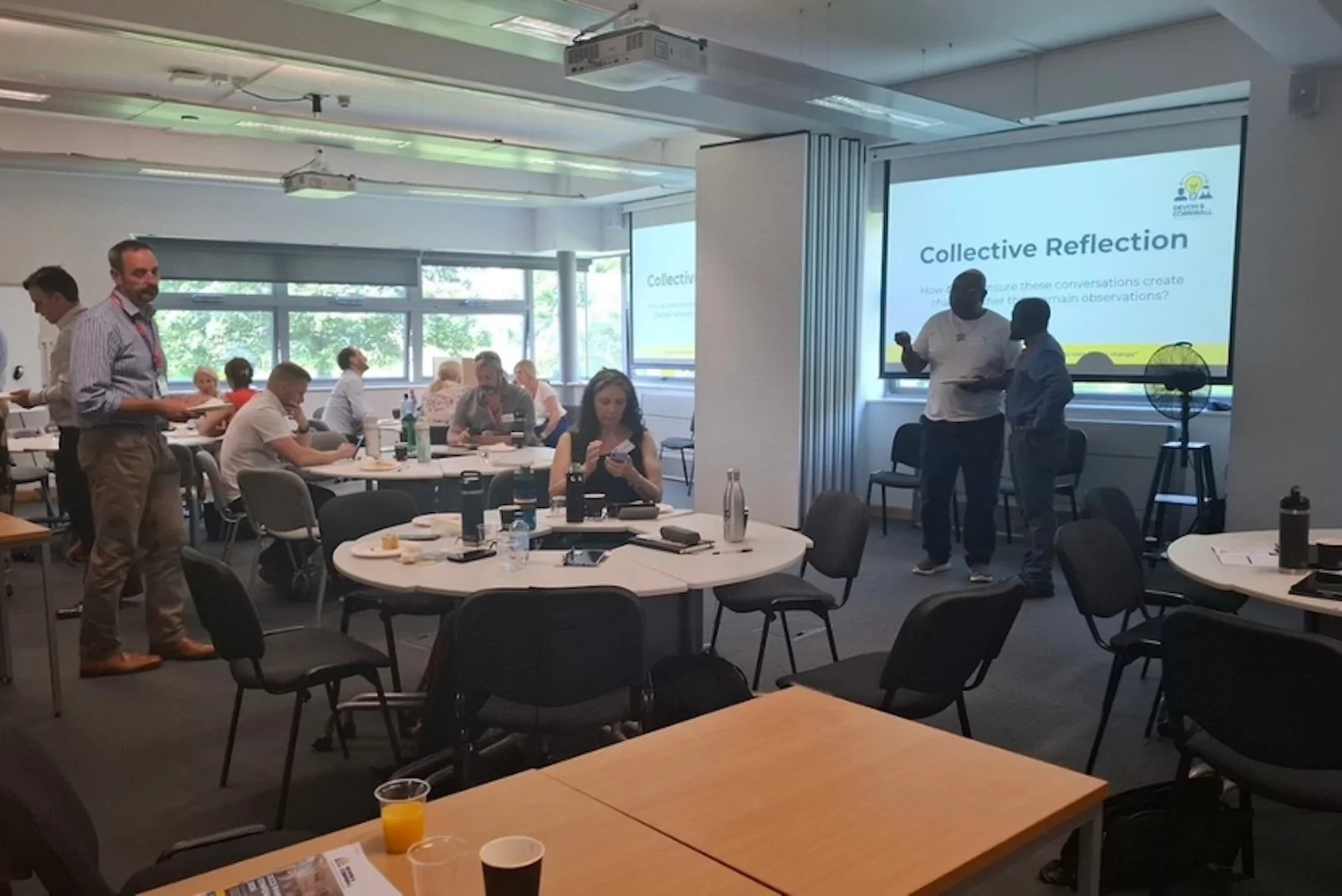
DCCS Panel members along with Chief Inspector Tom Cunningham, Karen Janicka (BWV Subject Matter Expert for Devon & Cornwall) and welcomed new panel members.
This month’s cases were filtered for both Stop and Search and Use of Force
Before observing body-worn footage selected by the panel from the previous month's cases, the Chair reminded panel members of wellness practice and the opportunity for debriefing at the end of the meeting.
The following report identifies points to action, D&C Police responses, case assessments and outstanding areas that require investigation.
Body-Worn Video Assessment .
Body-Worn Video Assessment .

ASSESSING D&C POLICE STOP AND SEARCH [S&S]
OCTOBER 2026 REPORT (3-5PM)
Body-Worn Videos
Via Microsoft Teams, at the start of each case BWV Systems Administrator Karen Janicka, played the clip selected by the panel before members completed their anonymous assessment, discussed and submitted the below feedback.
Chief Inspector Tom Cunningham circulated this report with actions and recommendations to D&C Police Basic Command Unit, Operations Department, Learning and Development, Force Stop and Search Lead and Force Use of Force Lead.
All confirmed discussions, decisions and/or actions taken by officers and supervisors following receipt of the DCCS Panel report are identified in bold blue text.
Panel members use GOWISELY as part of their scrutiny assessment. It is an acronym that officers must use to provide information to a subject before the Stop and Search. If the GOWISELY procedure is not followed then the S&S is highly likely to have been unlawful.
GROUNDS of the search
OBJECT of the search
WARRANT card [if not in uniform]
IDENTITY [officer name & number]
STATION [where officer is based]
ENTITLEMENT to receipt
LEGAL power used
YOU are detained for S&S
S&S Case 1 - Officers responded to a call for assistance regarding three individuals on stairs in Victoria Park believed to be waiting for drug supply.
A male was observed walking from the direction of the group, paying significant attention to police repeatedly turning to watch officers over a distance of at least half the park. CCTV was requested to monitor his behaviour due to his demeanour. The male walked from one known drug supply area into another, at which point he was detained under Section 23 of the Misuse of Drugs Act. The case was volunteered to the panel by the supervising officer following a formal complaint from the subject.
Actions to be commended:
De-escalation and maintaining professionalism under pressure. The panel highlighted the female officer’s consistent effort to explain, engage and de-escalate throughout what became a prolonged and highly charged encounter. Despite the subject becoming increasingly distressed, shouting, refusing touch, and repeatedly challenging the grounds, the panel noted she did not revert to force, she acknowledged his autism, she kept returning to a clear explanation of why the search had to continue, and she resolved the encounter without arrest.
Persistence and thoroughness in the search itself. The panel noted the officer’s approach when the medicinal cannabis was found alongside what appeared to be additional material, she did not accept the first explanation and continued until she was satisfied as to what was present and what the prescription covered. Members felt this demonstrated good professional judgement
Complaint-led transparency. The panel shared their appreciation that the supervising officer had brought this case forward following the subject’s complaint, rather than handling it entirely internally.
Investigation, responses and learning required with:Grounds for the search and communication. The panel’s concern was whether the grounds for the stop were sufficiently clear and properly communicated to the subject. Members highlighted that they could not see an obvious direct link between the subject and the original call, and several felt the subject was right to find the reasoning unclear. The panel noted that had a description been provided and properly articulated, linking the stop to the prior activity, the encounter would have been both more legally defensible and more comprehensible to the individual being searched.
Neurodiversity training. The panel highlighted the comment made by one of the male officers “you haven’t got a sign over your head saying you’ve got autism” as inappropriate and reflective of a broader assumption that neurodivergent conditions are visible. Members noted that the subject had disclosed his autism immediately, and felt this should have prompted an immediate change of approach: fewer voices, slower pace, reduced physical contact, and a clear lead officer.
Multiple officers speaking simultaneously. Members noted that at several points in the encounter, two or three officers were each attempting to de-escalate using different approaches at the same time. The panel highlighted that rather than calming the situation, this created a chaotic and overwhelming environment, particularly for someone with autism already in sensory distress. Officers in such a scenario should be encouraged to communicate clearly roles and responsibilities with clear leadership.
Understanding of medicinal cannabis legislation. The panel noted the officer’s candid admission at the close of the encounter that had the subject not told her the cannabis was legally prescribed, she would have assumed it was not. Members felt this was an honest and important acknowledgement, and highlighted it as pointing to a systemic knowledge gap rather than an individual failing, given how relatively recent medicinal cannabis legislation is and how frequently officers are now encountering it.
Response received from visiting BCU Commander
“She was on her own, so the grounds for handcuffs are: if you think somebody’s going to escape, if you think there’s a threat of violence from that person, or if there’s something in their possession that they could do harm to themselves or others with. She could have justified the use of handcuffs. However, if we take it right back to the beginning, around the question of whether there were grounds. I reread them in the chat, because unusually you don’t often get more than one ground, there are three there. The first one is a bit confusing about there being a shout for assistance with three people on the stairs in Park for people that aren’t familiar with Plymouth, is an area that we do have specific issues with drug dealing. It’s in the middle of the day and there are other people around. Those officers are part of the neighbourhood support team and they would offer a visible, proactive policing response in and around the city for specific problems.
The grounds, I imagine, are started on the fact that people have been acting suspiciously in and around an area associated with drug supply, and then what I would have liked to have seen, to make it clearer, was ground one enlarged upon with something like a description, which would have linked the stop and search to the previous activity. There may have been one, and it hasn’t been articulated, but just to tie that bit up, I would have liked to have seen that. Acting suspiciously in an area could be a confident part of a combination of grounds to stop someone. So, do I think there were grounds? I would have liked a little bit more, but I think with the three parts there, they could justify that.
The grounds weren’t really clearly articulated to him either. It was clear that cannabis was the object of the search, but the grounds for the search weren’t properly communicated, I would say.
On the comment about autism, it was probably a regretful comment more than anything. They definitely changed their attitude when he said he had autism. But I also want to hear from the panel, what could I and Tom take back that would have been a better approach? Because there would be ten other people you could stop who, in the worst case scenario, would punch someone in the face and run off. So there is that balance between preventing and detecting crime, as well as looking at the individual circumstances of a stop and search. The understanding about the new medicinal cannabis legislation is also something I think we need to take back, because that clearly was not understood by all in that scenario.”
S&S BWV 1 ASSESSMENT
D&C POLICE RESPONSE TO S&S BWV 1
Officer’s response not received
Panel response:
S&S Case 2 - Subject stopped in the vicinity of a reported motorcycle theft, matching the description of an involved person.
On speaking with him, he disclosed he had been smoking cannabis that evening. He appeared lethargic, groggy in speech, and had glazed eyes, consistent with being under the infl uence. Based on his proximity to the scene, his disclosure, and his demeanour, officers formed reasonable suspicion he may be in possession of illegal substances and conducted a search.
Actions to be commended:
Communication and grounds for the search. The panel highlighted that this case presented with well-documented grounds, a stolen vehicle check provided an immediate stop. Members noted this gave the encounter a firm legal foundation from the beginning and meant the subject could be clearly told why he was being stopped.
Proportionate and calm handling. The panel noted the officers maintained a calm tone throughout. Members felt the interaction was proportional to the circumstances, the subject cooperated, the officers responded in kind, and the encounter was resolved without escalation. The panel highlighted this as an example of good, uncomplicated street-level policing.
Appropriate use of community resolution. The panel noted the decision to issue a community resolution for the cannabis, the lowest-level disposal available, as appropriate and proportionate given the small amount found and the subject’s cooperation. Members felt this reflected good discretionary judgement and a sensible use of officer powers.
Investigation, responses and learning required with:GOWISELY. The panel highlighted that the officers had not activated the pre-record function on their body-worn cameras prior to the stop. Members noted that because the pre-record function captures the thirty seconds before an officer presses record, its absence meant the panel were unable to see the initial approach and the moment the stop was made. The panel shared the concern that this is a recurring theme across cases and felt it was important to understand whether this reflects a training gap, a habit, or a technical issue with the cameras being used.
5. Communication of grounds to the subject. While the grounds themselves were clear, the panel noted some members felt the explanation given to the subject at the point of stop could have been more explicit. Members highlighted that telling someone their vehicle has come back as stolen is not the same as clearly explaining that this forms the legal basis for a search of their person, and felt this distinction matters, both for the subject’s understanding and for the integrity of the stop.
Response received from visiting BCU Commander
“The grounds are clear, it’s a stolen vehicle, so that’s straightforward. What I would say is the pre-record function is something we’re actively working on across the BCU. The new cameras that are being rolled out as part of the southwest regional procurement do have that function, and it’s something we’ve been reinforcing in training. I accept that it wasn’t used here and that it would have given the panel a fuller picture of the stop.
On the community resolution, I’m satisfi ed that was the right call. A small amount of cannabis, a cooperative subject, no aggravating factors. That’s exactly the kind of situation where a community resolution is the appropriate disposal. What I’d want to be assured of is that the explanation given to the subject was clear, that he understood what a community resolution meant and that it was recorded properly. I’ll take that back and make sure that’s being reinforced.
The communication of grounds is a fair point. The vehicle being stolen gives you the power to stop, but you still need to articulate to the person why you’re searching them as an individual. I’ll feed that back.”

D&C POLICE RESPONSE TO S&S BWV 2
Officer’s response not received
Panel response:

ASSESSING D&C POLICE USE OF FORCE [UOF]
OCTOBER 2026 REPORT (3-5PM)
Body-Worn Videos
Panel members use PLANTER as part of their Use of Force scrutiny assessment:
PROPORTIONATE amount of force implemented
LENGTH of force used
ACTIONS of subject warranted use of force
NECESSARY to use force to protect the subject, officers or members of the public
TYPE used was minimum appropriate
ETHICAL to use force in the situation
REASONABLE for officer(s) to employ
UOF CASE 1 - Officers were called to assist the ambulance service with a young woman who had taken an overdose and was in a mental health crisis.
The subject was refusing to engage with paramedics and would not voluntarily get into the ambulance. Officers used physical force to assist in getting the subject into the ambulance for her own safety. The use of force was recorded and the case was brought to the panel for scrutiny. The subject was discharged from hospital the following day.
Actions to be commended:
Attendance and support to the ambulance service. The panel noted that officers responded to a request for assistance from the ambulance service and remained present throughout what was a distressing situation. Members highlighted that the mere presence of officers in situations involving mental health crises can be both stabilising and necessary, and felt the attendance itself was appropriate.
Physical safety maintained. The panel shared that despite the subject’s distress and resistance, the force used appeared to be the minimum required to get her safely into the ambulance, and that she was not injured in the process. Members felt the officers had not overreacted to the level of resistance presented.
Investigation, responses and learning required with:Whether police should have been there at all: The panel’s concern was around the question of what the police role is in a medical emergency of this nature. Members highlighted that this was primarily a health crisis, a young woman who had taken an overdose and shared the view that the default response of sending police alongside an ambulance deserves scrutiny. The panel felt it was important to understand what the joint protocol between police and the ambulance service says about when officers are required, and whether that protocol is being applied consistently or whether police are fi lling a gap that health services are not resourced to cover themselves.
De-escalation of the situation. The panel highlighted that there was limited evidence of a structured de-escalation approach being used before physical force was applied. Members noted the fi ve-step appeal framework, communication, engagement, encouraging the person to comply themselves, and only then physical intervention as a last resort, did not appear to have been worked through, and shared the concern that the decision to use force came relatively quickly given the subject’s vulnerability.
Principles and vulnerability. The panel noted that when dealing with someone in clear vulnerability or crisis, as this subject was, there are specifi c principles that should guide the approach: backing off, engaging in conversation, early negotiation, and evacuating the area where possible. Members highlighted that the footage suggested officers went in quickly rather than creating the time and space that a subject in this level of distress needed, and felt this was an important learning point particularly for officers who may not have had specifi c training in vulnerability-led contact.
What value did police add? The panel shared the question raised during the session directly: what was the specific value the police presence added to this encounter? Members noted the subject was discharged the following day, and felt it was worth asking honestly whether the use of force, and the involvement of police at all, had been necessary to achieve that outcome, or whether a different approach, or a different lead agency, might have achieved the same result with less impact on the subject.
Section 136 - powers and thresholds. The panel highlighted a question around whether a Section 136 Mental Health Act detention had been considered or discussed. Members noted that where a person is in a public place and appears to be suffering from a mental disorder to the degree that they need immediate care or control, Section 136 provides a specific power, and felt it was important to understand whether officers were aware of that power, whether it was considered, and if not, why not.
Response received from visiting BCU Commanders
“What was our role? What value did we add in order to get that lady into the ambulance? And as we talked about, discharged the next day.
I’ve also recently got into strategic firearms command, and people’s vulnerability in that situation is a well-recognised principle, and we would apply what’s called the BEJA principles, backing off, engaging in conversation, early negotiation, and evacuating the area. That is specifically training for how to deal with people in vulnerability or in crisis. My very fi rst thought when I saw this was that we went in too quickly.
I think the female officer had in her mind that she was going to give this person time and space, and have a plan with the ambulance as to what was happening. There is also the five-step appeal, communication, engaging, trying to get somebody to do it themselves, and then, that very last stage, actually putting hands on somebody. That wasn’t used, and I thought probably it could have been.
The question of what our role is in these situations, and whether we are the right agency to be leading, is one I think we need to be asking more broadly. I’m not sure we always are.”

D&C POLICE RESPONSE TO UOF BWV 1
Officer’s response not received
Panel response:
“I’d probably be interested in public perception around mental health. I don’t anticipate you to solve the problem, but we’re under increasing pressure to increase our productivity and deal with crime. What’s your opinion as members of the public around the difference in role between police and NHS particularly in that last incident? What would you have expected to see as members of the community? Were you surprised at how much police got involved? That would be a good question for you to answer for me. This is defi nitely one of a couple of favourite meetings, but they generally involve members of the community. Thank you for your time today.”
Legal Requirements
Officers are mandated to switch on their body-worn video (BWV) cameras from the beginning of any incident. During a Stop and Search, officers must provide specific information to the person being searched. While there is no strictly prescribed order, the College of Policing recommends using the mnemonic GOWISELY to ensure all statutory elements are covered.
For Use of Force, the College of Policing toolkit outlines PLANTER as a structured approach to ensure actions are justified and proportionate.
What is Procedural Justice?
Panel members score each BWV case using a consistent academic framework to inform how well the officers did in meeting legal requirements but also in the way they treated the person being stopped. Procedural Justice involves the pillars outlined below:
Voice: Was the subject allowed to give their side of the story or ask questions (within reason)?
Neutrality: Were the officer’s decisions unbiased and guided by transparent reasoning?
Dignity and Respect: Was the subject treated with courtesy and respect throughout the encounter?
Trustworthy Motives: Did the officer seek to explain and encourage understanding?
Accessible communication: Was the language used clear and easily understood by the subject?
Appropriate Tone: Was the tone of voice calm, respectful, and suitable for the situation?
Interested in making a difference?
Improve accountability, transparency and trust between D&C Police and the communities they serve.
Receive free training, work alongside inspiring individuals and help make positive changes.
Scrutinise Stop & Search and Use of Force, or join sub-committees to share your skills or learn new ones.