JUNE 2026 REPORT (3-5PM)

JUNE 2026 REPORT (3-5PM)
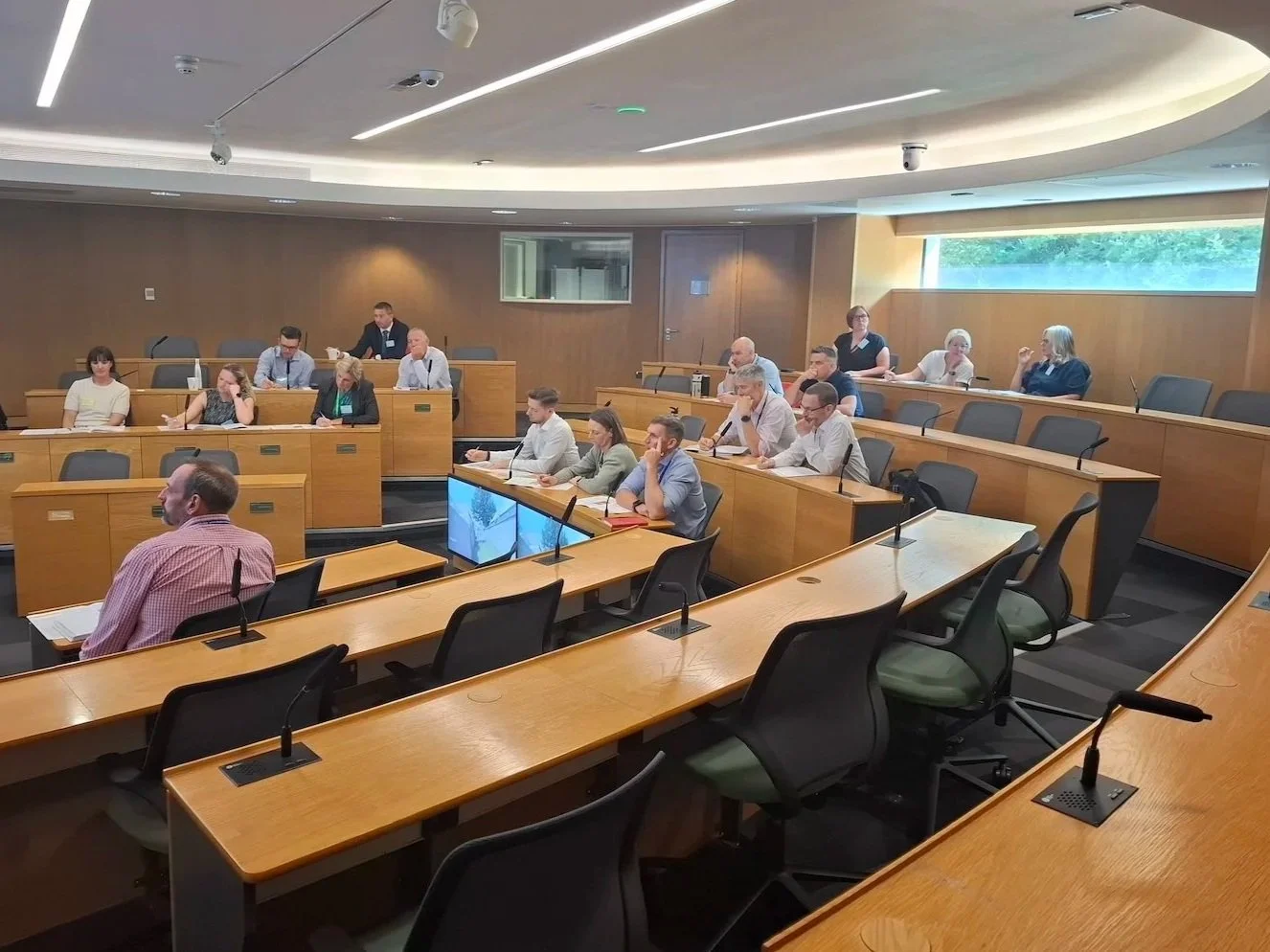
DCCS Panel members along with Chief Inspector Tom Cunningham, Karen Janicka (BWV Subject Matter Expert for Devon & Cornwall) and welcomed new panel members.
This month’s cases were filtered for both Stop and Search and Use of Force as follows:
Thematic: Officers with higher disproportionality rates
BCU Area: Alliance Operations
Before observing body-worn footage selected by the panel from the previous month's cases, the Chair reminded panel members of wellness practice and the opportunity for debriefing at the end of the meeting.
The following report identifies points to action, D&C Police responses, case assessments and outstanding areas that require investigation.
Body-Worn Video Assessment .
Body-Worn Video Assessment .
ASSESSING D&C POLICE STOP AND SEARCH [S&S]
JUNE 2026 REPORT (3-5PM)
Body-Worn Videos
Via Microsoft Teams, at the start of each case BWV Systems Administrator Karen Janicka, played the clip selected by the panel before members completed their anonymous assessment, discussed and submitted the below feedback.
Chief Inspector Tom Cunningham circulated this report with actions and recommendations to D&C Police Basic Command Unit, Operations Department, Learning and Development, Force Stop and Search Lead and Force Use of Force Lead.
All confirmed discussions, decisions and/or actions taken by officers and supervisors following receipt of the DCCS Panel report are identified in bold blue text.
Panel members use GOWISELY as part of their scrutiny assessment. It is an acronym that officers must use to provide information to a subject before the Stop and Search. If the GOWISELY procedure is not followed then the S&S is highly likely to have been unlawful.
GROUNDS of the search
OBJECT of the search
WARRANT card [if not in uniform]
IDENTITY [officer name & number]
STATION [where officer is based]
ENTITLEMENT to receipt
LEGAL power used
YOU are detained for S&S
S&S Case 1 - After being restrained for kicking officers who pulled her from a train platform, the subject refused to spit out a safety pin in her mouth and threatened to swallow it if officers intervened.
Actions to be commended:
Communication and de-escalation of the situation: Panel members noted that the officers maintained an effective communication style throughout a high-stress encounter. Despite the high tension of the situation, the officers kept their voice levels low, spoke calmly, and avoided a tone that could further agitate the young girl.
Measured and Proportionate Restraint: The panel commended the officers for using excellent judgment regarding physical intervention, specifically choosing not to use excessive force when handling a complex physical risk (the safety pin in the girl's mouth). The officers recognized that forcing her mouth open would induce extreme stress and potentially worsen the medical risk. Instead, they focused on securing her safety by removing her from the immediate danger of the railway line while maintaining her emotional stability.
Investigation, responses and learning required with:Multi-Agency Gaps: The panel highlighted the immense pressure faced by all agencies, noting a challenge where frontline police become the default responders for acute medical risks when secondary and tertiary care services face operational limitations or strict threshold constraints regarding custody and admission.
Mental Health Awareness: Panel members raised questions regarding how the police are managing the rising number of mental health incidents and the subsequent impact on resource allocation. They also inquired about what other agencies could do to better support or coordinate the situation.
Response received from visiting BCU Commander
"The impact of mental health on policing is really significant. This case is a perfect example: you have a vulnerable child, we have to do something, but as Karen explained, the NHS won't do anything, the care home is limited, and then staff have been assaulted. So, it comes back to us. Even internally, we took her to custody, but they wouldn't accept her because of those medical conditions. We end up in this situation, which isn't uncommon, for a significant amount of time. While that is going on, it requires a minimum of two officers to be with her, meaning they are unable to deal with anything else. It is a societal problem.
Why are the police there? I suppose it's an Article 2 situation; she has the right to life. If we were to leave her on her own and she kills herself, that is tragic in itself, and for the officers, there would be an investigation because it would be a death following police contact. They would be investigated for everything they did, regardless of whether this is truly a policing matter in the grand scheme of things. Someone would have lost their life, and all of the agencies involved would be looked at, but policing gets caught in this position of: what do we do? You try to hand it over to the most appropriate services, but they are not always available, especially out of hours.
There is a massive impact here, and I guess there is no easy solution. There is no broad overview investigating what can be done in society to alleviate this situation that we seem to have got ourselves into over the last five or six years. Actually, I think it's been going on longer than that. When I was on the front line 29 years ago, we were dealing with the exact same types of issues, struggling with who is best placed to deal with it. There has obviously been a huge amount of partnership work with different agencies, but quite often, we end up holding it because we are there 24 hours a day, and not everyone else is."
S&S BWV 1 ASSESSMENT
D&C POLICE RESPONSE TO S&S BWV 1
Officer’s response not received
Panel response:
S&S Case 2 - The subject was reported for loitering suspiciously at a service station for 45 minutes without a purpose, and when found in control of a motor vehicle, they failed to match the physical description of the registered keeper or insured party and subsequently refused to provide proof of identity or vehicle ownership.
Actions to be commended:
Communication: The panel commended the officer's calm, effective, and relaxed tone when managing a completely uncooperative individual, while noting that a minor phrasing choice ("being a bit interesting") could potentially be misconstrued, and that a jacket unfortunately obstructed the body-worn video and audio.
Investigation, responses and learning required with:De-escalation: Panel members highlighted that despite the officer being calm, he did not give the male person a chance to explain which limited his chance to explain himself.
Visibility of the BWV: The panel noted that the officer’s jacket obstructed the body-worn camera, which unfortunately made it difficult to fully see and hear the entirety of the interaction.
Response received from visiting BCU Commander
"Thank you for the feedback. I picked up on the comment about the jacket being in the way, which points to a bit of frustration, but that is undoubtedly one of the hazards of the job. Given the time of day, it was probably cold, so they had a waterproof jacket on, but it is certainly something for that officer to be aware of. Clearly, that reflection has been taken on board because this is a much-improved picture.
The officers did really well. Firstly, in dealing with the member of the public who was clearly causing a challenge, and then navigating the situation to a point where we detained someone in possession of two offensive weapons, which probably explains their behavior from the outset. So, yes, a really good result, and I will take great pleasure in passing that feedback on to the officers involved."
What is really great to see here is that I have attended one of these panels previously where poor communication was highlighted.

S&S BWV 2 ASSESSMENT
D&C POLICE RESPONSE TO S&S BWV 2
Officer’s response not received
Panel response:

ASSESSING D&C POLICE USE OF FORCE [UOF]
JUNE 2026 REPORT (3-5PM)
Body-Worn Videos
Panel members use PLANTER as part of their Use of Force scrutiny assessment:
PROPORTIONATE amount of force implemented
LENGTH of force used
ACTIONS of subject warranted use of force
NECESSARY to use force to protect the subject, officers or members of the public
TYPE used was minimum appropriate
ETHICAL to use force in the situation
REASONABLE for officer(s) to employ
UOF CASE 1 - Female arrested for Domestic related offences - taken to hospital for medical treatment following arrest.
Actions to be commended:
Professionalism: The panel commended the officers for doing their best to prioritize the individual's safety while facing extreme verbal abuse and swearing, noting the personal risk and difficulty of managing such a high-stress situation.
Investigation, responses and learning required with:Multi-agency Support: The panel suggested that hospital nurses might have been able to assist slightly more to help de-escalate the situation regarding the cannula, without placing the medical staff at undue risk.
Use of Restraint and Sedation: The panel inquired whether it is legally possible to restrain and sedate a completely irrational and violent individual who poses a threat to themselves and others in a hospital setting. It was clarified that medical sedation is not a practice available to the police and would not be used due to strict human rights considerations.
Officer Aftercare and Support: The panel inquired whether any welfare or aftercare support was provided to the female officer involved, noting that she became visibly worn out, irritable, and was subjected to severe verbal abuse during the incident.
Response received from visiting BCU Commanders
"The officer's capacity to be relieved from the scene was challenged due to resourcing issues. The first opportunity for relief occurred when the sergeant arrived, at which point myself and another sergeant stepped in to provide support. This situation highlights a wider business challenge regarding competing demands, which was particularly difficult for the officer who had been with the individual since 7:00 AM after taking over from the night shift. Additionally, based on discussions with the staff and the senior clinician treating the individual that day, the prognosis was determined to be a behavioral issue rather than a medical one."

D&C POLICE RESPONSE TO UOF BWV 1
Officer’s response not received
Panel response:
UOF CASE 2 - Police called for a suspect claim to have a guy who is detained but was later not true and he was posted to the right support
Actions to be commended:
Communication and de-escalation: The panel highlighted the clear communication throughout the incident, noting that the officers' compassionate tone and their decision to check in on the individual as an excellent example of successful de-escalation that helped him access support.
Restraint and Decisive Threat Management: The panel highly commended the officers for showing remarkable restraint by using handcuffs instead of a Taser, executing decisive tactical actions to protect the public inside a busy store, and giving the individual enough time to comply despite him claiming to have a gun.
Investigation, responses and learning required with:Multi-agency Support: The panel suggested that hospital nurses might have been able to assist slightly more to help de-escalate the situation regarding the cannula, without placing the medical staff at undue risk.
Risk Assessment: The panel explored the complexities of tactical entry timing and positioning when dealing with a suspected firearm, while noting that the officers' minimal use of force was important in ensuring the response did not appear excessive.
Response received from visiting BCU Commanders
"From my point of view, coming from my place and background, the call that they're faced with is somebody who's got a gun and is threatening to shoot someone. They've arrived. They've got someone with their hands down the back of their trousers, potentially. I thought they were remarkably restrained and the use of force and the level and tone at which they went in.
I think they could have easily gone in at a much higher level and possibly not even considered going round the back of the detainee and taking that approach because of the risk involved. If he did draw a gun and we hadn't taken decisive steps, then you could potentially have members of the public being shot at. So, I thought it was an exceptional bit of policing, and I'm personally really proud of the officers and their actions today. And I'll be taking that back. I would like to think that they've been recognized for that."

D&C POLICE RESPONSE TO UOF BWV 2
Officer’s response not received
Panel response:
Legal Requirements
Officers are mandated to switch on their body-worn video (BWV) cameras from the beginning of any incident. During a Stop and Search, officers must provide specific information to the person being searched. While there is no strictly prescribed order, the College of Policing recommends using the mnemonic GOWISELY to ensure all statutory elements are covered.
For Use of Force, the College of Policing toolkit outlines PLANTER as a structured approach to ensure actions are justified and proportionate.
What is Procedural Justice?
Panel members score each BWV case using a consistent academic framework to inform how well the officers did in meeting legal requirements but also in the way they treated the person being stopped. Procedural Justice involves the pillars outlined below:
Voice: Was the subject allowed to give their side of the story or ask questions (within reason)?
Neutrality: Were the officer’s decisions unbiased and guided by transparent reasoning?
Dignity and Respect: Was the subject treated with courtesy and respect throughout the encounter?
Trustworthy Motives: Did the officer seek to explain and encourage understanding?
Accessible communication: Was the language used clear and easily understood by the subject?
Appropriate Tone: Was the tone of voice calm, respectful, and suitable for the situation?
Interested in making a difference?
Improve accountability, transparency and trust between D&C Police and the communities they serve.
Receive free training, work alongside inspiring individuals and help make positive changes.
Scrutinise Stop & Search and Use of Force, or join sub-committees to share your skills or learn new ones.