FEBRUARY 2026 REPORT (7-9PM)

FEBRUARY 2026 REPORT (7-9PM)
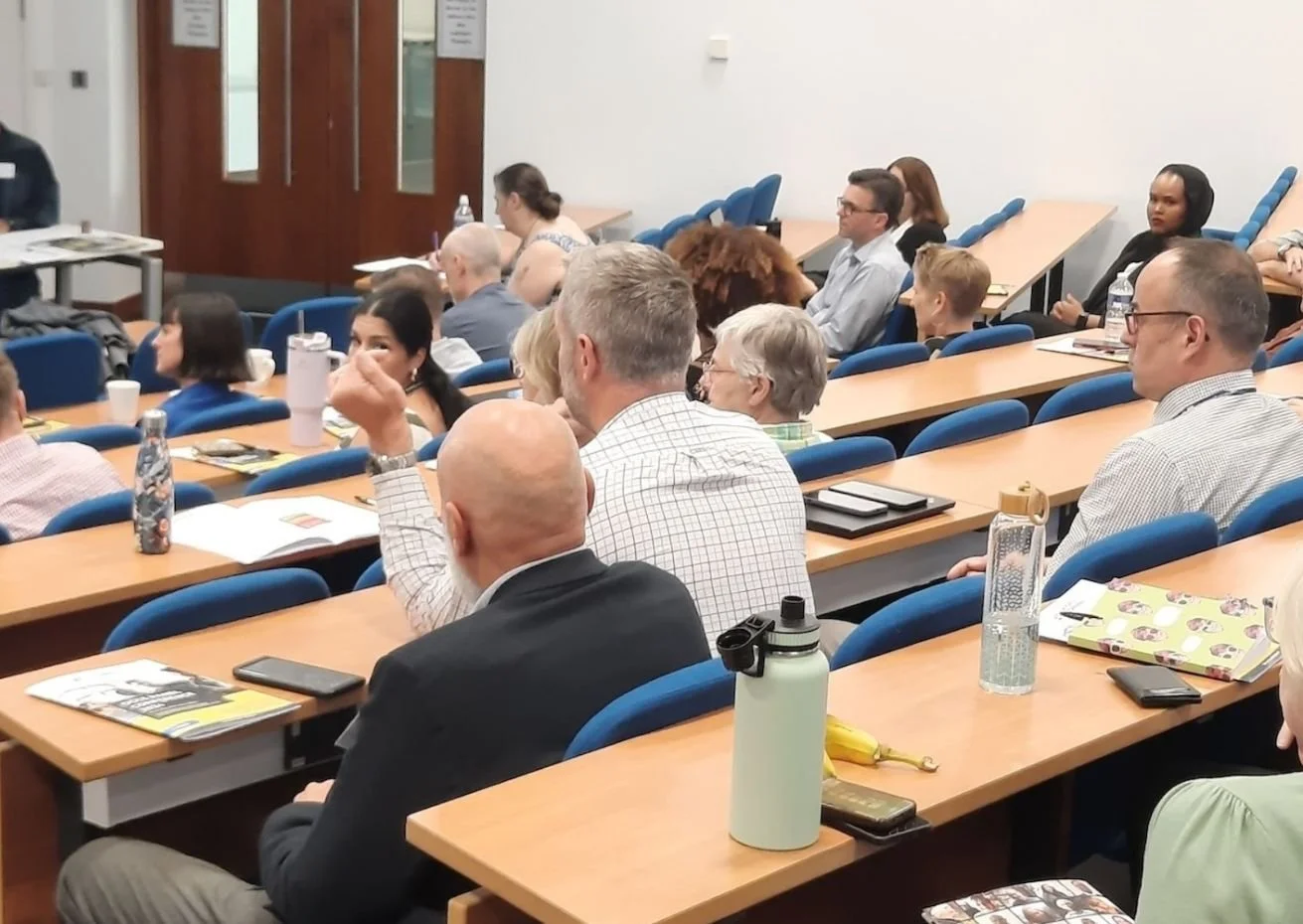
DCCS Panel members along with Chief Inspector Tom Cunningham, Karen Janicka (BWV Subject Matter Expert for Devon & Cornwall) and welcomed new panel members.
This month’s cases were filtered for both Stop and Search and Use of Force as follows:
Thematic: Officers with higher disproportionality rates
BCU Area: Alliance Operations
Before observing body-worn footage selected by the panel from the previous month's cases, the Chair reminded panel members of wellness practice and the opportunity for debriefing at the end of the meeting.
The following report identifies points to action, D&C Police responses, case assessments and outstanding areas that require investigation.
Body-Worn Video Assessment .
Body-Worn Video Assessment .

ASSESSING D&C POLICE STOP AND SEARCH [S&S]
FEBRUARY 2026 REPORT (7-9PM)
Body-Worn Videos
Via Microsoft Teams, at the start of each case BWV Systems Administrator Karen Janicka, played the clip selected by the panel before members completed their anonymous assessment, discussed and submitted the below feedback.
Chief Inspector Tom Cunningham circulated this report with actions and recommendations to D&C Police Basic Command Unit, Operations Department, Learning and Development, Force Stop and Search Lead and Force Use of Force Lead.
All confirmed discussions, decisions and/or actions taken by officers and supervisors following receipt of the DCCS Panel report are identified in bold blue text.
Panel members use GOWISELY as part of their scrutiny assessment. It is an acronym that officers must use to provide information to a subject before the Stop and Search. If the GOWISELY procedure is not followed then the S&S is highly likely to have been unlawful.
GROUNDS of the search
OBJECT of the search
WARRANT card [if not in uniform]
IDENTITY [officer name & number]
STATION [where officer is based]
ENTITLEMENT to receipt
LEGAL power used
YOU are detained for S&S
S&S Case 1 - Youth in a group in an area known for youth using drugs.
Actions to be commended:
Conduct: The officers treated subjects with respect and care. The female officers were calm and polite throughout.
Necessary: While the majority of the Panel agreed that the stop and search was necessary given the underlying intelligence, some members suggested that the objective could have been achieved through a less intrusive conversation initially.
Proportionate: Most of the Panel agreed the incident was proportionate, Officer numbers and response appropriate for the situation.
Ethical: The majority of the Panel agreed the stop and search was ethical with minor points regarding informal language use and camera position.
Investigation, responses and learning required with:
GOWISELY: Most Panel members agreed that while the officers followed GOWISELY, the explanation was delivered too quickly; therefore, recommend slowing down the communication especially when drug use is suspected among young people to ensure the individual fully understands the process and their rights.
Communication & Explanation: The Panel questioned the female officer’s approach after she immediately informed a parent that her daughter was being searched for drugs without first offering any reassurance. It was suggested that the officer should have instead started the conversation by stating that the daughter was safe to better manage the parent's concerns.
Body-Worn Video: Limited camera angles prevented a clear view of the entire stop and search. Ensuring proper positioning is required to ensure full capture to maintain transparency.
Operational Considerations: Panel members raised a concern about the smell of cannabis not being potential grounds for the stop and search due to time constraints and resource scarcity.
Response received from visiting BCU Commander Matt Longman
“ Policing requires a difficult balance of discretion and community priorities, where seemingly proactive responses are often the result of prior failed interventions or specific safeguarding concerns that aren't always visible to the public. While enforcement may appear harsh, its main goal is often to steer vulnerable young people away from exploitation and into supportive diversionary pathways rather than unnecessary criminalization.”

S&S BWV 1 ASSESSMENT
D&C POLICE RESPONSE TO S&S BWV 1
Thank you for your feed back, I will take it on board going forward
Panel response:
S&S Case 2 - A young man driving suspiciously including driving slowly and almost crashing a red light, then smelt cannabis when male stepped out of the vehicle.
Actions to be commended:
Safety & Control: Female Officer ensured colleagues’ safety before the search. The young male subject was handcuffed prior to search, reducing risk from potential weapons.
Communication & Engagement: The male officer was better at calming the subject even when pushed by the subject.
Body-Worn Video: Pre-record activated, capturing all of the incident.
Operational Outcome: No further action was taken when the drug test came out negative, showing proportionate response.
GOWISELY: Most of the Panel members felt neutral on whether GOWISELY was followed as the officers actions were guided by transparency.
Necessary: Panel members largely agreed that the stop and search was necessary, though some questioned the exact moment the justification shifted from suspicious driving to a drug-related search based on the faint smell of cannabis.
Proportionate: Most of the Panel agreed it was, though some were concerned about the continued attitude of the female officer when requested by the suspect to stop touching his arm.
Ethical: Most of the Panel assessed the search as ethical, with some unsure due to the communication style of the female officer which was rather reactive and defensive.
Investigation, responses and learning required with:Communication & Explanation: Panel members raised concerns regarding the officer's reactive and defensive communication style, noting that such an approach risked unnecessarily escalating the situation.
Specifically, the panel highlighted the female officer’s comment "you can imagine the calibre of people that we deal with" as inappropriate.
Targeted training in positive communication to ensure more professional interactions was advised.Operational Considerations: Panel members questioned the necessity of the officer maintaining a physical grip on the youth once he was already handcuffed, noting that her refusal to release him created an avoidable power struggle.
Complying with his request could have de-escalated the tension, whereas the officer's insistence on physical hold appeared more as an exercise in control than a requirement for security.
Response received from visiting BCU Commander Matt Longman
“ While real-life scenarios are difficult to replicate in training, the Panel’s feedback serves as an important part of the ongoing learning loop for officers to reflect on and improve their responses. Regarding the grounds for the search, while video cannot capture smell, officers reported the scent of cannabis and observed behaviors that justified further investigation; however, the Panel emphasized that officers must clearly communicate whether they are investigating drug or alcohol impairment to avoid confusion. On the matter of physical control, the Panel noted that the decision to maintain a hold on a handcuffed subject often done for safety and to prevent sudden injury resulted in an avoidable power struggle.”

S&S BWV 2 ASSESSMENT
D&C POLICE RESPONSE TO S&S BWV 2
“I am grateful for the comments by the panel and I am thankful again to have some time to reflect on things that we often forget about after the event. I have spoken about this with another colleague and they recognise that I could have used silence as a better communication method however he was a challenging individual to deal with. In future incidents I will consider a wider range of communication styles which I am capable of doing.”
Panel response:
S&S Case 3 - A Male visited an address that has been busy with suspected drug supply . He was there for a matter of seconds and had money on him.
Actions to be commended:
GOWISELY: Panel members agreed that all the elements were generally followed.
Necessary: The majority of Panel members agreed that S&S was required though others were indifferent citing that the grounds for the search were insufficient.
Ethical: Most of the Panel assessed the search as ethical, with some unsure due the language used by one of the officers repeatedly referring to the subject as “mate”.
Body-Worn Video: Pre-record activated, capturing all of the incident.
Operational Outcome: No further action was taken where no items were found , showing proportionate response.
Investigation, responses and learning required with:Operational Considerations: Panel members raised a concern about the grounds for the stop and search as there was no clear context for searching the subject.
Additionally, regarding the search record, members queried whether a physical hard copy should be offered by default alongside the digital version to accommodate subject preference.
Response received from visiting BCU Commander Matt Longman
“While digital delivery is now the standard, we must ensure accessibility by more clearly offering hard copies at the point of contact, particularly for those with visual impairments or digital barriers. Regarding the stop, the officers acted professionally, yet their purposeful entry suggests they were likely acting on specific intelligence rather than routine patrol. Ultimately, without the full operational brief, it is difficult to determine the exact factors that necessitated this level of intervention or to draw a definitive conclusion on the approach taken.”

S&S BWV 3 ASSESSMENT
D&C POLICE RESPONSE TO S&S BWV 3
Thank you for the feedback. The location was near to an address known for drug dealing. The subject had been previously stopped at the location after visiting the address and found to be in possession of drugs. On this occasion, he had just left the same property, was unable to account for his presence and was smelling of cannabis.
I understand the need for offering a hard copy of the search and have taken the feedback on board.
Panel response:

ASSESSING D&C POLICE USE OF FORCE [UOF]
FEBRUARY 2026 REPORT (7-9PM)
Body-Worn Videos
Panel members use PLANTER as part of their Use of Force scrutiny assessment:
PROPORTIONATE amount of force implemented
LENGTH of force used
ACTIONS of subject warranted use of force
NECESSARY to use force to protect the subject, officers or members of the public
TYPE used was minimum appropriate
ETHICAL to use force in the situation
REASONABLE for officer(s) to employ
UOF CASE 1 - A call for shop lifting as the gentleman took a bottle of vodka but hadn't made it out.
Actions to be commended:
Communication & De-escalation: The officers quickly de-escalated the situation by sitting the suspect up; consequently, the initial chaos caused by the distress in the store transitioned into a calm environment.
Wellbeing: Officers preserved dignity by pulling up the suspect’s trousers, supported him up and explained the whole process carefully.
Outcome: After successfully restraining the subject in a chaotic environment, officers managed to stabilize the situation. The shop attendants ultimately decided not to pursue a formal complaint as the subject had not exited the premises with any items. Consequently, the officers provided the man with transport to his home.
PLANTER: Most of the Panel assessed protocol as generally followed.
Necessary: The majority of Panel members assessed the use of force as necessary, although. some unsure due to the chaotic scene in the beginning as they didn’t see what provoked him being wrestled to the ground.
Proportionate: Most of the Panel agreed the incident was proportionate.
Ethical Most Panel members assessed the use of force as ethical, but there were concerns noted about holding the suspect on the floor.
Investigation, responses and learning required with:
Operational consideration:The initial scene was chaotic and attracted significant attention from bystanders. Consequently, panel members inquired whether the officers could have relocated the suspect to a more private or controlled area.
Outcome: The panel questioned the circumstances under which an off-duty officer should intervene to de-escalate a situation.
It was noted that off-duty officers may intervene when a clear and immediate need arises.
Response received from visiting BCU Commander Matt Longman
“ One key question is whether off-duty officers should get involved. In reality, policing is one of those roles where you’re never completely off duty. It might sound like a cliché, but if something happens in front of you, an accident or an offence then you have a responsibility to step in if you feel it’s safe to do so. In that particular situation, it was probably a difficult judgement call, but yes, involvement would be expected where it’s safe.
There’s also an evidential point around leaving the store. To prove shoplifting, you generally need evidence that the person intended to permanently deprive the owner of the item, which is often demonstrated by them leaving the premises. That said, if officers or staff have seen someone conceal an item, for example, hiding a bottle inside a jacket, that can amount to reasonable suspicion. Given the strong national and local focus on tackling shoplifting, that threshold is important and would likely justify intervention.
One of the real challenges comes when officers arrive at a chaotic scene, like in the first footage we saw, where the individual is highly distressed and communication isn’t working. At that point, clarity is essential. If you’re applying handcuffs, the situation should move into a formal arrest, otherwise you risk sitting in a grey area where it’s unclear what’s happening. Making the arrest provides a clear framework: secure the individual, secure the evidence, such as the vodka bottle and gather any statements or support the business is willing to provide.
Shoplifting is often underestimated, but it has significant impacts, including links to organised offending and exploitation of vulnerable people. While police take these incidents seriously and attend when required, it can be frustrating when businesses later decide not to proceed because they feel it isn’t worth their time. That leaves officers in a difficult position, because you can’t fully assess the wider risks or context including whether someone may be vulnerable until
D&C POLICE RESPONSE TO UOF BWV 1
First of all I would like to say thank you for your time to review this incident and that I welcome any and all feedback to help improve my service to the public in my role as a police officer. I understand how essential it is that police actions are reviewed by independent Community Panels to give unbiased feedback to operational performances which in turn helps improve police service, transparency and public perception, keeping with the key themes of the Peelian Principles.
Despite being unable to review my BWV at this time, I can recall the basis of the incident and some of the key points that I have taken away from reflecting upon it.
With regards to this incident we had received a report of a male that was currently being restrained by members of the public after he had been challenged by staff at a local store. On arrival I can recall the male was being restrained by members of the public and the main priority was to prevent injury to all persons involved, including the male being restrained, by using the minimum level of force required to achieve the desired aim. Primarily this is sought to be achieved through effective tactical communications to help de-escalate the situation without the need for use of force. However, due to the dynamic nature of the incidents police officers attend, such as this example, it is sometimes necessary to use handcuffs to create a sterile environment where the speed of the situation can be slowed, to allow safe and proportionate responses. A duty of care comes naturally with incidents such as this and I feel it is essential that subjects are treated with dignity and respect, with the actions of police officers being professional throughout.
Again thank you for your time and feedback, as I will take this as a positive throughout my career.
Panel response:
UOF CASE 2 - A male individual who was being recalled to prison due to domestic violence reported at a female’s property.
Actions to be commended:
Communication & De-escalation: Officers handled the situation with a calm and caring professionalism. They listened to the individual's requests, engaged in reasonably. A great example of a good policing event.
Wellbeing: The officers offered the suspect water upon request and asked about his welfare, and offered support services at the police station.
PLANTER: Most of the Panel assessed protocol as generally followed.
Investigation, responses and learning required with:
Communication: The panel noted that the officer’s reference to 'waterboarding' was entirely inappropriate.
Emotional Impact: A concern was raised regarding the victim by a panel member, who appeared anxious in the kitchen throughout the incident, and the level of support subsequently offered to her.
Response received from visiting BCU Commander Matt Longman
“I think that’s a really fair point, and I felt the same way. You picked up on something important there. I’m sure no harm was intended by the comment, but you raised a very valid concern, we don’t always know people’s backgrounds, and as professionals, we need to be mindful of the language we use. It’s not something that should be said casually, so your observation was spot on. I thought they handled that really well. Given what we already know about that individual and along with his previous history, there was a real possibility the situation could escalate into violence. The team responded quickly and effectively, which helped contain things. I was also impressed with how fast everyone reset and regained control of the environment. Having someone take charge, getting the lights on, waking people, slowing things down, and coordinating movement made a big

D&C POLICE RESPONSE TO UOF BWV 2
I take the comments on board. The comment was said to ease tension following the arrest of the subject. I had built a rapport with him and used language that I thought would help him reposition his head so that we could give him water without making him choke. I accept that the comment is impactive and if someone has previous trauma relating to waterboarding, they may have reacted negatively to this. The Police are often criticised for not being personable and I always try to ensure that I connect to someone where they are victim, witness, or suspect. A key tactic I use is humour to ease tension which builds rapport. I felt this worked with the subject on this occasion and providing him with water which he wasn’t entitled to helped keep him on side and morally it was the right thing to do. This is just a snapshot of an incident where the physical and emotional elements to all of those involved cannot be captured by BWV alone. I will not change my style when interacting with members of the public in the future however I will not use the term waterboarding again.’
Panel response:
UOF CASE 3 - A youth suspect described to have a knife in a park running from the police and detained and searched.
Actions to be commended:
Communication & De-escalation: Officers very quickly calmed the situation, helped the young man out of his position as he was afraid of the whole situation.
Wellbeing: Upon realising that the young man was frightened, the officers calmed the young man down and told him to be calm.
Outcome: Officers successfully restrained the subject on the ground before searching him for the knife described and were let go as the male was found with a pack of cigarettes only and left for good.
PLANTER: Most of the Panel assessed protocol as generally followed.
Proportionate: Most of the Panel agreed the incident was proportionate given the threat of a weapon.
Ethical: Most Panel members assessed the use of force as ethical, noting that the officers were reassuring to the youth as he was scared.
Investigation, responses and learning required with:Ethical Consideration: Officers quickly took a hold of the situation with no power struggle between the young man and the officers, as the suspect was running which led to suspicion of carrying a weapon.
Response received from visiting BCU Commander Matt Longman
“ I appreciated hearing everyone’s reflections, it was reassuring that we reached a balanced view, recognising that while the individual may have seemed cooperative, the police response was driven by safety realities like rising knife crime and officer assaults, and it was encouraging to see officers quickly de-escalate once control was established. So thank you for that. And because you're just a bit strapped for time, I wondered if I might just say a massive thank you to everyone for giving up two hours of your evening. It really is appreciated.”

UOF BWV 3 ASSESSMENT
D&C POLICE RESPONSE TO UOF BWV 3
Reflecting upon this use of force incident I was involved in on the 28th December 2025 at Devonport Park, Plymouth, I attended the park around 17.50 hours doubled crewed with another PC after speaking with a group of other children just outside the park who reported that their friend had just been beat up by some teenagers within in the park, and that one of them in a all-black puffa coat had a knife. Because of this when completing an area search for suspect in all black, I could hear in the distance teenagers laughing and therefore went towards this sound where I saw a group of teenagers in the play park within Devonport Park where two males were in all in black sat together. When going towards them and entering the play park, I immediately saw a male teenager all in black with a black puffa coat, as perfectly matching the description of the suspect who allegedly had a knife, where when asking him to stay where he was, he then ran giving me even more grounds and reasonable believe he did in fact have a knife. Because he was running towards other people in the park and he already been violent previously, and I had an honest held believe he did have a knife and could cause harm to the public if allowed to go, I ran after him and caught him where upon the suspect turning around to face me suddenly, as I could not clearly see his hands, and I believed he could have stabbed me very quickly when coming face to face with me, I therefore withdrew my taser and laser dotted and aimed at the suspect as to gain control and safety of the situation and as to reduce any threat he could pose to me or the public by being ready to discharge my taser if I needed to. The subject then became fully compliant and I followed my taser training as agreed and signed off on by aother PC who is a force taser trainer and who reviewed my BWV footage and agreed it was within accordance with training and practice.
Therefore I was happy with my use of force and dealing of the situation as I firstly handled the threat and risk of the situation as per the national decision model but also showed respect and empathy for the suspect when he was complaint and scared as a teenager by calming him down and dealing with the incident after securing him appropriately. I understand that antisocial behaviour is a force priorities as well as a national priorities and also understand how dangerous knife crime can be with this aspect requiring safety and control from police use of force as the first thing to do.
Panel response:
Legal Requirements
Officers are mandated to switch on their body-worn video (BWV) cameras from the beginning of any incident. During a Stop and Search, officers must provide specific information to the person being searched. While there is no strictly prescribed order, the College of Policing recommends using the mnemonic GOWISELY to ensure all statutory elements are covered.
For Use of Force, the College of Policing toolkit outlines PLANTER as a structured approach to ensure actions are justified and proportionate.
What is Procedural Justice?
Panel members score each BWV case using a consistent academic framework to inform how well the officers did in meeting legal requirements but also in the way they treated the person being stopped. Procedural Justice involves the pillars outlined below:
Voice: Was the subject allowed to give their side of the story or ask questions (within reason)?
Neutrality: Were the officer’s decisions unbiased and guided by transparent reasoning?
Dignity and Respect: Was the subject treated with courtesy and respect throughout the encounter?
Trustworthy Motives: Did the officer seek to explain and encourage understanding?
Accessible communication: Was the language used clear and easily understood by the subject?
Appropriate Tone: Was the tone of voice calm, respectful, and suitable for the situation?
Interested in making a difference?
Improve accountability, transparency and trust between D&C Police and the communities they serve.
Receive free training, work alongside inspiring individuals and help make positive changes.
Scrutinise Stop & Search and Use of Force, or join sub-committees to share your skills or learn new ones.