APRIL 2026 REPORT (3-5PM)

APRIL 2026 REPORT (3-5PM)
DCCS Panel members along with Chief Inspector Tom Cunningham, Karen Janicka (BWV Subject Matter Expert for Devon & Cornwall) and welcomed new panel members.
This month’s cases were filtered for both Stop and Search and Use of Force as follows:
Thematic: Officers with higher disproportionality rates
BCU Area: Alliance Operations
Before observing body-worn footage selected by the panel from the previous month's cases, the Chair reminded panel members of wellness practice and the opportunity for debriefing at the end of the meeting.
The following report identifies points to action, D&C Police responses, case assessments and outstanding areas that require investigation.
Body-Worn Video Assessment .
Body-Worn Video Assessment .

ASSESSING D&C POLICE STOP AND SEARCH [S&S]
APRIL 2026 REPORT (3-5PM)
Body-Worn Videos
Via Microsoft Teams, at the start of each case BWV Systems Administrator Karen Janicka, played the clip selected by the panel before members completed their anonymous assessment, discussed and submitted the below feedback.
Chief Inspector Tom Cunningham circulated this report with actions and recommendations to D&C Police Basic Command Unit, Operations Department, Learning and Development, Force Stop and Search Lead and Force Use of Force Lead.
All confirmed discussions, decisions and/or actions taken by officers and supervisors following receipt of the DCCS Panel report are identified in bold blue text.
Panel members use GOWISELY as part of their scrutiny assessment. It is an acronym that officers must use to provide information to a subject before the Stop and Search. If the GOWISELY procedure is not followed then the S&S is highly likely to have been unlawful.
GROUNDS of the search
OBJECT of the search
WARRANT card [if not in uniform]
IDENTITY [officer name & number]
STATION [where officer is based]
ENTITLEMENT to receipt
LEGAL power used
YOU are detained for S&S
S&S Case 1 - A male seen by himself matching a description in the exact location given reported for dealing drugs in a park.
Actions to be commended:
Communication: It was noted that the officers demonstrated a respectful and composed approach throughout the interaction. Their tone remained calm, and they engaged with the individual in a manner that avoided unnecessary escalation.
Welfare of the individual during the search: The Panel recognised that the officers should be particularly commended for the kindness and reassurance shown toward the young man, especially once it became clear that he was vulnerable. The way they explained at the end that he had done nothing wrong was supportive and helped bring the interaction to a positive close.
Procedural Awareness: It was also noted that there was evidence of procedural awareness, with officers following the necessary steps for stop and search, and ensuring the interaction was completed appropriately.
Investigation, responses and learning required with:Communication during the search: It was noted that while the overall tone was calm, it would have been helpful for officers to clearly explain each step of the search as it was happening (e.g. stating when they were going into pockets or checking items). This is particularly important when engaging with individuals who may be vulnerable, as it can reduce anxiety and prevent escalation.
Clarity of roles between the officers and communication: At times, with multiple officers present, it became unclear who was leading the interaction. This may also have been confusing for the individual as noted by the panel.
Use of handcuffs: The immediate use of handcuffs in what appeared to be a low-risk situation raised questions among panel members, while it is acknowledged that handcuffing is often used in drug-related incidents to prevent harm (e.g. swallowing substances), there is an opportunity to ensure this is clearly justified, proportionate, and, where possible, explained to the individual.
Questioning approach: The panel raised questions around some questions, such as those relating to previous drug use, which were not clearly linked to the outcome of the search, particularly as no drugs were found. These types of questions may risk causing confusion or increasing tension, and their necessity should be carefully considered.
Welfare considerations: There were indicators that the individual may have been vulnerable, including being out late at night and linked to a care setting. This raises the importance of ensuring welfare checks are considered and appropriately recorded, and whether further safeguarding action was required.
Information sharing and forms after a search: The Panel noted that there is a learning opportunity around how information is shared. While it is standard practice to provide an option of emailing the copy or sharing the it as a hard copy by post when contact details are given, consideration could also be given to: Whether there are more flexible or proactive ways of sharing information, particularly where individuals may be distressed or not in a position to engage fully at the time as well as ensuring
Response received from visiting BCU Commander
“ Lucy - Thank you for your feedback. To address the points raised, there are a few areas we will take away and review, including whether a welfare check was completed. We will confirm this and provide feedback. Regarding the search, there were quite a few officers present. It appears that multiple units arrived at the same time. In that situation, we would expect some officers to stand down, as a large number can lead to communication difficulties, with multiple people speaking at once. This should have been managed more effectively at the time, and we will feed that back. It is also important to ensure that police units are made available again for other incidents where needed.
Denise - In relation to handcuffing, officers should not routinely handcuff during a stop and search. However, in drug-related situations, handcuffing is more common. Each case must be assessed individually, but officers are often mindful of the risk of individuals attempting to swallow drugs, which can quickly escalate into a physical struggle. Handcuffing is therefore sometimes used as a preventative measure to reduce risk. If someone attempts to swallow substances, officers may need to intervene physically, which can lead to a more forceful and potentially dangerous situation. Early restraint can help prevent this escalation. On communication during the search, the points raised are valid. Clearly explaining each step of the search and what will happen next can help reduce anxiety and improve understanding, particularly for vulnerable individuals. This is something we will feed back to the officers. Regarding the sharing of forms, my understanding is that forms are stored and can be provided upon request, including via email if details are given. However, they are not automatically sent. Individuals can request a copy within a set period, typically up to 12 months. We will confirm this process. Finally,

S&S BWV 1 ASSESSMENT
D&C POLICE RESPONSE TO S&S BWV 1
Officer’s response not received
Panel response:
S&S Case 2 - Occupants of a vehicle, all of whom have recent drugs intel. And a lady searched in the second part.
Actions to be commended:
De-escalation of the situation: The panel noted that the officer demonstrated a generally calm and approachable manner, which appeared to help maintain a non-confrontational atmosphere. Their tone, at times, was friendly and conversational, which can be effective in reducing tension and encouraging cooperation
GOWISELY: The panel noted that procedurally, the officer appeared to follow the required steps, showing awareness of process and ensuring that the interaction was carried out in line with expectations.
Language that was used: It was noted that the language used was calm and de-escalting but also the words selected by the officers might not have been the best. Procedure was followed and on point but the choice of words was inappropriate for the officer to use such words for both searches and there was no privacy given to the people as it was in the middle of Junction. The comment about the chest was really bad and uncalled for, which is the wrong choice for an officer.
Investigation, responses and learning required with:Use of language and boundaries: The panel noted that some comments made during the interaction were perceived as inappropriate, including references or insinuations about drug use and remarks relating to personal appearance.
Maintaining professionalism while being approachable: It was noted that there is a clear learning point around balancing a friendly approach with appropriate boundaries. Attempts to be conversational or humorous should not compromise professionalism or risk offending individuals.
Dignity and privacy considerations: The panel raised concerns around the choice of location of the stop and appeared to offer limited privacy, which may have impacted the dignity of those involved.
Response received from visiting BCU Commander
“ Lucy - Yeah, I agree with what’s already been said. He did some good work, but then became too familiar and made inappropriate comments, which undermined it. As mentioned by a panel member, it risked undoing all the positive aspects.If he had avoided those comments, the interaction would have been stronger. It’s possible he knew the individuals or was trying to keep things calm, especially with five people in the car and a potentially escalating situation.
However, that approach didn’t land well and was disappointing. I think he was trying to ease tension, but the comments were inappropriate and need reflecting on in terms of how they come across. I also noticed a few additional remarks that were unnecessary. In terms of location, officers should use a more discreet area where possible. If this was a highly visible location, that’s something to reflect on. Regarding the wider point, there is a balance between maintaining calm and using appropriate language. That line was crossed here. In terms of support, having a PCSO present can help, but the key skill is being able to manage silence appropriately without resorting to unhelpful comments. That’s something that needs to be developed regardless of who is present. This is largely a skills-based issue. While procedures were followed, the officer became too familiar, and that impacted how the interaction was perceived. ”

S&S BWV 2 ASSESSMENT
D&C POLICE RESPONSE TO S&S BWV 2
Officer’s response not received
Panel response:
S&S Case 3 - A vehicle linked to drug supply with a female driving it and a male in a vehicle who is suspected to leave the country without proof of residence and also linked to a drug.
Actions to be commended:
Control of the situation: It was noted by the panel that the officer managed to keep the situation calm throughout the interaction and did not unnecessarily fill pauses, which helped avoid escalation. He also handled initial interaction effectively by remaining factual, calm, and clear in his communication, which helped de-escalate the situation early on.
Communication: The panel observed that the officer maintained control of the interaction by communication with the female driver respectfully which was a plus and prevented escalation, particularly where the female driver initially appeared highly agitated. with the positive observations regarding de-escalation and acknowledged the officer’s effective handling of the initial volatility in the interaction.
Investigation, responses and learning required with:Availability of gender appropriate officers during the search: A question was raised about consistency of practice, specifically in relation to searches where officers may not have same-gender support available. The panel queried whether proceeding with the search in the absence of another officer is appropriate and acceptable in those circumstances.
Operational Clarity in Progression of Intelligence-Led Actions: The panel raised concerns about the progression of the incident, noting a lack of clarity and transparency in how the situation escalated from initial drug intelligence to wider discussions involving organised crime and immigration matters. Highlighting that this transition felt unclear and difficult to follow, and suggested this may require further review in terms of communication and decision-making clarity.
Response received from visiting BCU Commander
“ Lucy - (The officer) He’s done a pretty good job in terms of how he managed the individual and the search. He made efforts to bring a female officer to undertake the search where possible, but that wasn’t achievable. The alternative would have been custody for a search, although I didn’t hear that clearly offered. I also didn’t hear the individual strongly objecting to the search being carried out by him once a female officer couldn’t be located, so I’m not overly concerned about how that part was managed. It’s difficult to fully assess from a video alone what may have been happening in the background to lead to the escalation. It may be that intelligence was already known but not shared at that stage to support the initial engagement, or that information was still being received on scene. There are a number of possible scenarios, and it isn’t entirely clear. I did hear most of what was communicated, although there were a couple of parts I’m not fully certain about due to the wind and audio quality. It’s possible some details may have been missed, but overall most of it was clear.”

S&S BWV 3 ASSESSMENT
D&C POLICE RESPONSE TO S&S BWV 3
Officer’s response not received
Panel response:
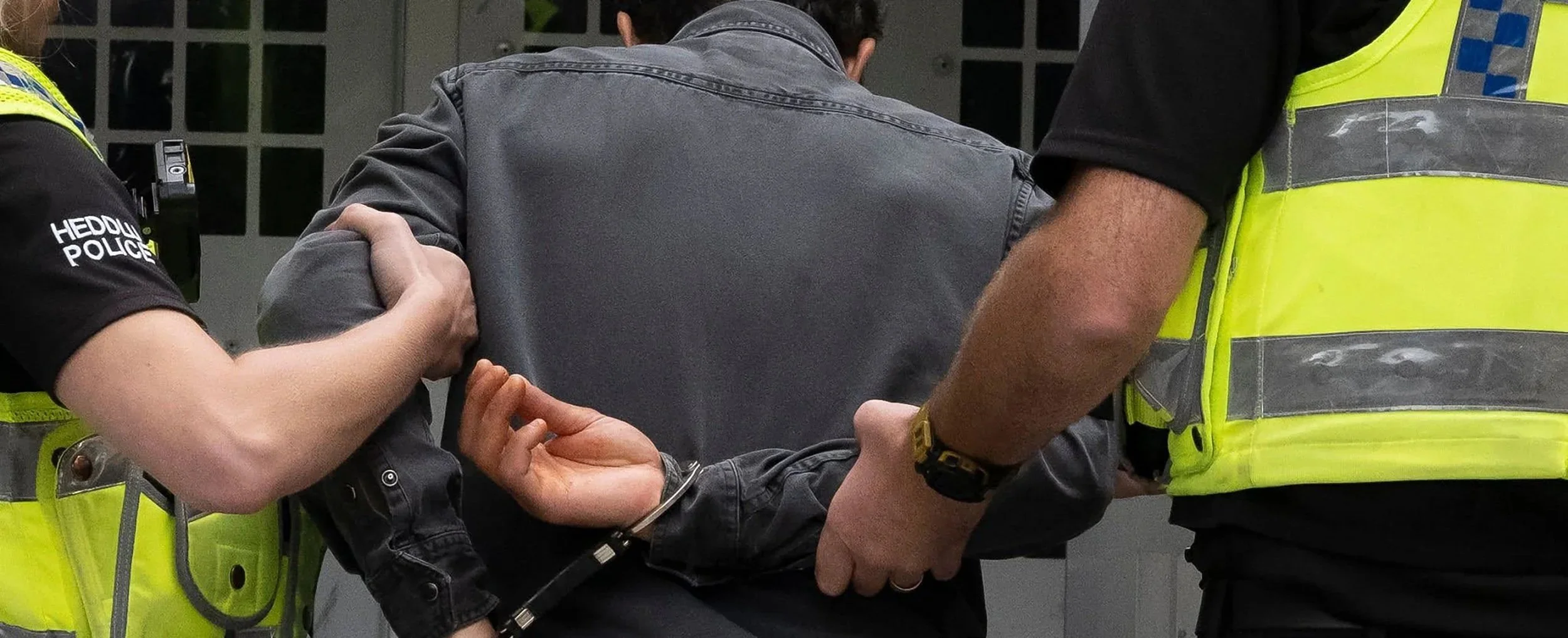
ASSESSING D&C POLICE USE OF FORCE [UOF]
APRIL 2026 REPORT (3-5PM)
Body-Worn Videos
Panel members use PLANTER as part of their Use of Force scrutiny assessment:
PROPORTIONATE amount of force implemented
LENGTH of force used
ACTIONS of subject warranted use of force
NECESSARY to use force to protect the subject, officers or members of the public
TYPE used was minimum appropriate
ETHICAL to use force in the situation
REASONABLE for officer(s) to employ
UOF CASE 1 - A 9-year-old boy was reported missing by his mother following an argument at home involving his 14-year-old sister, who was experiencing a mental health crisis.
Due to caring for a 9-month-old baby, the mother was unable to leave the address to search for him. The child, who is known to police, was later located by officers.
Actions to be commended:
Communication and De-escalation: Notably, one officer was engaging with the child in a calm and good manner and the child was engaging with him calmly too over a sustained period. This appeared to have a positive impact, as the child responded better to this approach than to others, indicating effective rapport-building.
Use of force: Where force was used, it was largely brief and linked to immediate risk, particularly in preventing the child from running into danger or climbing onto the vehicle in a way that could have resulted in injury. This suggests that, in those moments, force was applied with a clear safeguarding purpose.
Investigation, responses and learning required with:The initial interaction between officers and the child requires further examination. The use of physical force, specifically grabbing the child by the scruff of the neck, alongside language used by the officer, appeared disproportionate given the child’s age and may have contributed to escalating the situation.
Contradicting communication styles between officers. While one officer effectively de-escalated the situation, another appeared to struggle to engage the child, at times using a more confrontational tone. This inconsistency raised questions around the training provided to the officers for engaging with such situations.
The body-worn video (BWV) indicates that a significant portion of effective communication occurred inside the vehicle, which is not fully audible. Understanding what was said during this time is important, as it appeared to play a key role in calming the child with the other officer.
The decision-making process regarding the non-use of police protection powers (PPP/PPN) should also be reviewed. While it is acknowledged that these powers are a last resort, clarity is needed on: The threshold applied in this case. The rationale for keeping the child within the home environment despite identified risks
Response received from visiting BCU Commanders
“ Lucy - I think the concerns around the initial interaction are valid. It’s difficult to see what led to the officer grabbing the child in that way, and the tone used appeared to escalate the situation. As you mentioned, there was a longer period of calm discussion led by the officer in the car. The body-worn video also shows some of this, although the officer appears somewhat heightened. That calmer interaction was important, as the initial approach could have escalated things significantly. In terms of his age, at 9 years old he is below the age of criminal responsibility, so the focus is on finding the most appropriate place for him. This explains the length of time spent discussing what should happen and how to manage the situation procedurally, including where he should go and the logistics of getting him there. There is also the option of police protection powers, and I’ll bring Denise in to outline the PPP/PPN processes in more detail.
Denise - Yes, just going back to the mention of “triple P” (police protection powers), it’s a power we use to take a child into our care while we work with social services to ensure they are safeguarded. The child is then handed over once appropriate arrangements are in place. I previously worked in child protection policing, so I’m very aware of the challenges involved, including the importance of trauma-informed and child-first approaches, as well as the difficulties social care faces in finding suitable placements. Officers will always explore every possible option before using these powers, as it involves removing a child from their family, which can sometimes be more traumatic than leaving them in a supported home environment. In this case, although the child had assaulted his sister, he is below the age of criminal responsibility. There was also a family support network available, which meant officers could keep him within that environment rather than removing him. This is why they spent a significant amount of time at the address, ensuring he remained safe while considering next steps. If police protection powers had been used, officers may have had to stay with him for a prolonged period while waiting for social care, which reflects some of the challenges we face. Our priority is always to keep the child safe and, where possible, within their family. While we do use these powers when necessary, they are very much a last resort.”
Further response received from Second BCU Commander:
“Just to add on what has already been said, some of the phrases used, which were repeated twice, swearing is antagonistic, and I'm sure the feedback will be picked directly up with those officers.
I know that that young person is known to the police. We've picked up a previous incident in one of our panels meetings when it was a very similar set of behaviours where the grandparents had declined to care for her. She was out on the street. She was using a lot of difficult language and it's quite a contrast to some of the language used in that situation. I also think that there you picked up a really valid point.
There wasn't any empathy or situational awareness of that young person. I think the officers clearly had had previous dealings with her. My brief is that she is quite well known to most of the officers and my view of that interaction is they knew who they were going to deal with. Some good learning for us to take back to those offices. And I think if they watch this video back, which I would imagine will be part of the feedback process, they will see that. And I would expect them to be probably disappointed with how they approached that encounter.”

D&C POLICE RESPONSE TO UOF BWV 1
Officer’s response not received
Panel response:
“Lucy - The conversations I’ll be having with the officers will be reflective, particularly with two of them, focusing on the overall look and feel of the interaction. We need to consider whether this is how we would want to approach a situation involving a 9-year-old boy. It may be influenced by prior interactions with the child, which could explain the initial response. However, there remains an expectation that officers operate at a higher standard. This has been a valuable space for reflection on how we want policing to look and feel. Thank you all for your time and for your thoughtful and valuable contributions.”
“Denise - I really appreciate your time. I always fi nd these panels helpful and enjoy attending them, as they give us the opportunity to see how officers operate on the ground, rather than from behind a desk, across a range of situations. From a fi rearms perspective, officers are very effective when dealing with high-threat and high-harm scenarios. However, it’s the softer skills that are sometimes required where we can lean in more as leaders. I truly appreciate your time and your candid feedback. Thank you.”
Legal Requirements
Officers are mandated to switch on their body-worn video (BWV) cameras from the beginning of any incident. During a Stop and Search, officers must provide specific information to the person being searched. While there is no strictly prescribed order, the College of Policing recommends using the mnemonic GOWISELY to ensure all statutory elements are covered.
For Use of Force, the College of Policing toolkit outlines PLANTER as a structured approach to ensure actions are justified and proportionate.
What is Procedural Justice?
Panel members score each BWV case using a consistent academic framework to inform how well the officers did in meeting legal requirements but also in the way they treated the person being stopped. Procedural Justice involves the pillars outlined below:
Voice: Was the subject allowed to give their side of the story or ask questions (within reason)?
Neutrality: Were the officer’s decisions unbiased and guided by transparent reasoning?
Dignity and Respect: Was the subject treated with courtesy and respect throughout the encounter?
Trustworthy Motives: Did the officer seek to explain and encourage understanding?
Accessible communication: Was the language used clear and easily understood by the subject?
Appropriate Tone: Was the tone of voice calm, respectful, and suitable for the situation?
Interested in making a difference?
Improve accountability, transparency and trust between D&C Police and the communities they serve.
Receive free training, work alongside inspiring individuals and help make positive changes.
Scrutinise Stop & Search and Use of Force, or join sub-committees to share your skills or learn new ones.